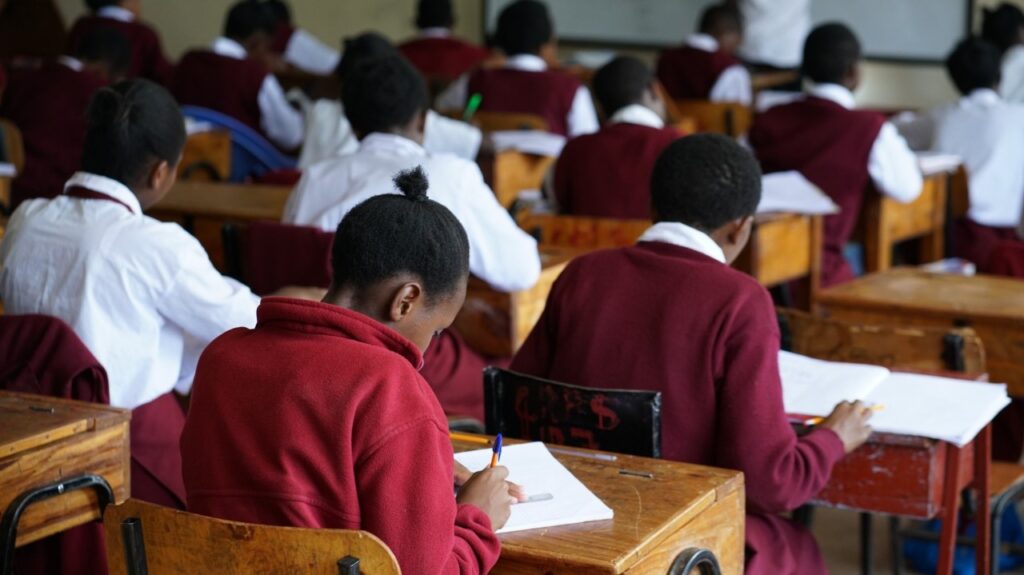
Every year, thousands of Kenyan students graduate with degrees in hand, ready to enter the workforce. But here’s the problem: the jobs they’ve been trained for simply aren’t there.
Youth unemployment in Kenya remains stubbornly high, even as universities continue to churn out graduates. The disconnect is glaring our education system is preparing young people for a job market that no longer exists in the way it once did. We’re running an assembly line that produces a product with nowhere to go.
It’s time we ask ourselves: are we educating our children, or just processing them?
The Assembly Line Model Is Broken
For decades, Kenya’s education system has operated on a simple premise: study hard, pass exams, get a degree, land a job. It’s a formula that worked when the economy was expanding and jobs were plentiful. But that world is gone.
Recent data shows a troubling gap between the number of graduates and available corporate positions. Students who excel in mathematics, sciences, and languages find themselves competing for a shrinking pool of opportunities. Many end up underemployed or pursuing work entirely unrelated to their studies.
The reality is that our current system prioritizes memorization over problem- solving, conformity over creativity, and employment over entrepreneurship. We’re teaching students to fit into boxes that no longer exist.
What If We Asked Different Questions?
Imagine if, instead of asking students “What do you want to be when you grow up?”, we asked them:
- What problem do you see in your community that you’d like to solve?
- What gift or passion do you have that could make the world better?
- If you could create something that didn’t exist, what would it be?
These are provocative questions. They challenge young minds to think beyond job titles and salary brackets. They shift the focus from fitting into existing systems to creating new ones.
Global trends support this shift. Competency-based curriculum models are replacing traditional rote learning in progressive education systems worldwide. Countries that prioritize entrepreneurship and innovation in their schools are
seeing measurable economic impact. The message is clear: the future belongs to problem-solvers, not just degree-holders.
From Employment to Empowerment
I’m not suggesting we abandon core subjects or that everyone should become an entrepreneur. Some students will thrive in traditional employment, and that’s perfectly fine. But the mindset we instil matters.
Rather than embedding the idea that success equals a corner office, we should be asking students to envision their unique contribution to society. Schools should become laboratories for discovering individual talents and passions not factories producing identical outputs.
Vocational training programs and early-stage entrepreneurship initiatives have shown promising results in Kenya and across Africa. When students are given the space to explore their interests and develop real-world skills, they don’t just find work they create it.
The Shift We Need
Here’s what a reimagined education system could look like:
Personalized Learning Paths: Identify each student’s strengths and interests early, then tailor their education accordingly.
Problem-Based Learning: Replace rote memorization with projects that address real community challenges.
Soft Skills Development: Prioritize critical thinking, creativity, collaboration, and communication alongside traditional academics.
Entrepreneurial Mindset: Teach students to identify opportunities, take calculated risks, and turn ideas into action.
Mentorship and Exposure: Connect students with innovators, entrepreneurs, and professionals who can broaden their perspective on what’s possible.
This isn’t a radical departure it’s an evolution. One that recognizes the world our children will inherit and equips them to shape it rather than simply navigate it.
A Call to Reimagine
To my fellow educators, policymakers, parents, and business leaders: we have a responsibility to rethink what education is for.
If we continue down the current path, we’ll keep producing graduates for a job market that can’t absorb them. But if we shift our focus to nurturing innovators, problem-solvers, and creators, we’ll build an economy that generates opportunities rather than competes for them.
The question isn’t whether our students are smart enough or hardworking enough. They are. The question is whether our system is brave enough to prepare them for the world as it actually is and as it could be.
What’s your take? How can we better prepare the next generation for a future that demands innovation over conformity? Share your thoughts in the comments.