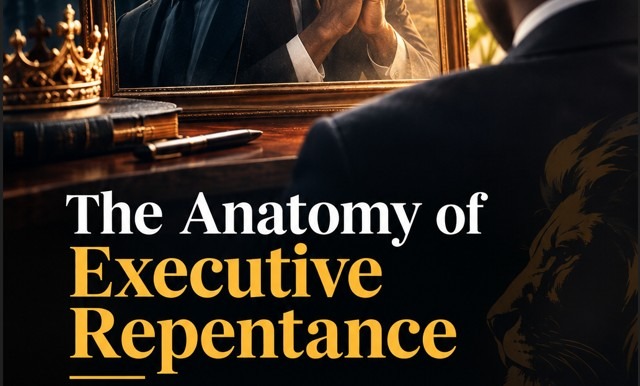

Kenya is going through hard times. Let us not pretend otherwise. The pressure is real. The cost of living is heavy, jobs are scarce, and taxes bite deeply into the pockets of hardworking citizens. Businesses are struggling, and families are stretched to their limits. Many people are tired, angry, and afraid. Spiritually, many are dry. Economically, many are burdened. Politically, many are disappointed. That is the truth.
But there is another truth we must face just as honestly: our relentless complaining is destroying us.
Turn on the TV. Listen to talk radio. Scroll through social media. Sit in a matatu. Walk into an office. The pattern is exactly the same everywhere. Blame. Finger-pointing. Anger. Endless complaints. One politician blames another. Citizens complain about leaders. Church people complain about the government. Young people complain about the older generation, and the older generation complains about the youth. It is noise. Constant, deafening noise. And if we are not careful, that noise will become the permanent atmosphere of our hearts.
Let me be clear. I am not saying we should ignore injustice. I am not saying we should pretend things are fine, or that we should keep quiet in the face of wickedness, corruption, or poor leadership. Truth must be spoken. Power must be challenged. Evil must be called evil. Some will argue that calling for a spiritual focus is simply an excuse for inaction—a way to pacify the masses while leaders run the country into the ground. But there is a profound difference between righteous discernment and a complaining spirit. One seeks God and truth, leading to decisive, principled action. The other spreads bitterness, leading to helplessness and spiritual dryness.
We Have Taken Our Eyes Off God
Our greatest problem is not political. It is spiritual. We have taken our eyes off the Maker of heaven and earth and fixed them on men. We are looking to politicians to save us. We are looking to powerful, connected, wealthy, and elected people as though they hold the final answer.
They do not.
Yes, God uses people. Yes, governance and policy matter deeply across all mountains of influence in our society. But no man is the source of our salvation. No politician is the hope of Kenya. Scripture warns us plainly in Jeremiah 17:5: “This is what the LORD says: ‘Cursed is the one who trusts in man, who draws strength from mere flesh and whose heart turns away from the LORD.’”
When a people begin to draw their strength from flesh, they become reactionary and unstable. They are tossed around by every campaign promise and every breaking-news update. We see this not just in Kenya, but globally. A 2023 study by the Pew Research Center showed a significant decline in trust in political leaders globally, with only 30% of respondents expressing confidence in their government. Furthermore, the World Health Organization reported a 25% increase in anxiety and depression worldwide since the start of the pandemic, explicitly linking this to feelings of helplessness and societal instability. We are looking to broken systems to heal broken hearts, and it is failing.
Seek the God of Men, Not the Men of God
This must be said plainly: seek the God of men, not the men of God. Do not make any politician your messiah. God is bigger than any party, any president, and any king. We have become too impressed by men, too controlled by charisma, and too glued to our screens.
The question Kenya should be asking is not merely, “Who said what on television last night?” The deeper question is, “What is God saying about this nation?”
It is the Lord who enthrones kings and dethrones them. Nothing catches Him by surprise. So when leadership disappoints us, we must ask a deeper question: Why did God allow it? Perhaps He is exposing what is in us. Perhaps He is showing us the consequences of trusting in flesh. Have we asked whether we vote by wisdom or by emotion? Have we asked whether we are led by conviction or by tribal loyalty and propaganda? These are national questions that demand introspection.
What If God Is Trying to Teach Us Something?
What if this season is exposing us?
What if God is showing us the fruit of shallow thinking?
What if He is exposing our love for personality over principle?
What if He is revealing our addiction to quick fixes?
What if He is confronting our tribal loyalties?
What if He is uncovering our greed, our compromise, our prayerlessness, and our refusal to tell ourselves the truth?
Perhaps we need to stop asking only, “What is wrong with our leaders?”
Perhaps we must also ask, “What is wrong with us?”
What role have we played?
What standards have we tolerated?
What lies have we believed?
What compromises have we normalized?
What kind of leadership have we celebrated?
What did we reward at the ballot?
What did we ignore because it benefited us?
What did we excuse because the person spoke our language, came from our region, attended our church, or told us what we wanted to hear?
A nation does not drift into crisis overnight. There are layers. There are choices. There are patterns. There are seeds and harvests.
Kenya must look in the mirror.
Staying in the Temple Is Better Than Living in the News Cycle
Many of us are overfed on news and underfed on God. We know the latest political argument and the newest scandal, but do we know what the Lord is saying?
When Finance Bill debates dominate the headlines, many become experts in outrage, but few become serious in prayer. WhatsApp groups explode, X spaces fill up, and matatu conversations become war zones. But where is the place of seeking God? You do not have to live on the news cycle to understand the times. You must live in the presence of God. Stay in the temple. Stay in prayer. Stay in the Word. It is in the presence of God that confusion breaks and deception is exposed.
Complaining all day will not change this nation. Shouting at your phone will not solve unemployment. Yes, things are difficult, but bitterness is not a strategy. What if God is trying to teach us something? What if He is exposing our love for personality over principle, uncovering our compromise, our prayerlessness, and our refusal to tell ourselves the truth? Kenya must look in the mirror.
The Biblical Warning Against Complaining
One of the ugliest things about complaining is that it blinds us to the goodness of God. We forget the prayers He answered, the peace He preserved, and the evil He restrained. Gratitude is hard. Trust is hard. Repentance is hard. But those are the paths that lead somewhere.
Scripture does not treat complaining lightly. In Exodus 16:8, Moses tells the people that their complaints are not really against him and Aaron, but against the Lord. Behind much of our complaining is a deeper accusation against God Himself, subtly declaring that He is not wise or faithful enough. Philippians 2:14–15 calls us to do everything without grumbling so that we may shine like stars in a crooked generation. Refusing to grumble is a vital part of our witness.
We must look to history to see how nations rebuild. In the post-World War II era, societies faced immense disillusionment and ruin. Yet, historical precedents show a powerful movement of community and spiritual renewal during that time. They rebuilt by shifting their focus beyond purely human solutions and returning to foundational faith. Even today, data from a recent Kenyan economic survey indicates that while economic hardships are prevalent, community-led spiritual initiatives have shown positive correlations with increased social cohesion and individual well-being in affected areas. True transformation happens when communities unite under God’s principles, not just political flags.
The Way Forward: Give Thanks, Stand in the Gap, Plead for Mercy
If we truly love Kenya, let us do more than complain. Let us stand in the gap. Let us thank God for what He has done and plead for His mercy. Mercy for leadership failures. Mercy for corruption. Mercy for our own tribalism, selfishness, and prayerlessness.
Yes, leaders must repent. But citizens must repent too. We must repent for idolizing power and loving comfort more than truth. A nation cannot be healed by political commentary alone. We need divine wisdom, and divine wisdom often does not flatter human logic.
Fellow Kenyans, let us turn our gaze back to our Maker. Let us stop bowing to political rhetoric and stop complaining as if God has abandoned us. He has not. The promise of God still stands in 2 Chronicles 7:14: “If my people, who are called by my name, will humble themselves and pray and seek my face and turn from their wicked ways, then I will hear from heaven, and I will forgive their sin and will heal their land.”
That is the word. That is the way. That is the hope. Let us stop complaining. Let us seek the Lord.
The Anchor in Times of Crisis
History bears witness to the undeniable power of character. Look back at the leaders who have guided nations through their darkest hours—times of war, economic collapse, and profound social upheaval. The leaders who truly transformed their communities were those who prioritized public trust over personal gain. They understood that their authority was a sacred trust, granted by the people and ordained by a higher purpose. They anchored their nations not with empty rhetoric, but with an unshakable commitment to truth.
This is the standard we must return to. We need leaders who are deeply rooted in their identity, who trust wholeheartedly in the God of the Bible as their guide, and who lead with an unyielding love for their neighbour.
Demand Character, Inspire Change
Let me say this again: what I am talking about is not a task for the faint of heart. It requires a radical shift in how we view authority and how we choose those who hold it. We can no longer afford to be passive consumers of political theatre.
It is time to align our actions with our higher purpose. Step forward in your own community and model the faithfulness, humility, and accountability you wish to see in our highest offices. Mentor a young leader and instil in them the biblical principles of servant leadership. When you cast your vote, or when you support a community initiative, refuse to endorse those who lack the character required to hold the public trust. Transform your community by demanding integrity, and build a lasting legacy that will bless generations to come.