What do you do when someone tells you that you are wrong? What happens when a court stops a project, an auditor raises a concern, or an independent institution challenges a decision you strongly believe in? For many leaders, those moments are not easy. The first instinct can be to defend, to push back, or even to attack the person or institution bringing the uncomfortable message. But sometimes, the voice we are most tempted to silence is the voice we most need to hear.
The Bible gives us a powerful picture of this through the story of King Ahab and the prophet Micaiah. Ahab wanted to go to war, and he had hundreds of prophets telling him what he wanted to hear. They assured him that he would succeed. But Jehoshaphat wanted to hear from someone who genuinely spoke for the Lord. There was one prophet, Micaiah, who had a reputation for not simply telling the king what he wanted to hear. Ahab’s response is revealing: “I hate him because he never prophesies anything good about me.” The problem was not that Micaiah was necessarily wrong. The problem was that he refused to flatter the king.
That is a dangerous place for any leader to reach. Leadership becomes fragile when agreement is valued more than truth. When everyone around the leader learns to say yes, difficult questions stop being asked. Mistakes become harder to see. Warnings are ignored. Eventually, the leader may find themselves surrounded by people, yet completely isolated from the truth.
This is why healthy leadership needs accountability. In public life, independent institutions such as the Judiciary, auditors and regulatory bodies have an important role in checking the exercise of power. Their decisions may sometimes be debated or challenged through lawful processes, but disagreement should not automatically turn them into enemies. A leader does not become weaker because someone challenges a decision. Sometimes, that challenge is the guardrail that prevents a much greater mistake.
The lesson goes beyond government. It applies to business leaders, church leaders, executives and anyone entrusted with influence. Who has permission to tell you the truth? Who can disagree with you without losing their place? Who can point out something you may not want to see? These are uncomfortable questions, but they are important ones.
Micaiah stood before a powerful king and refused to change his message simply because the king wanted another answer. That kind of courage is still needed today. We need leaders who can listen without feeling threatened and people around those leaders who are courageous enough to speak honestly.
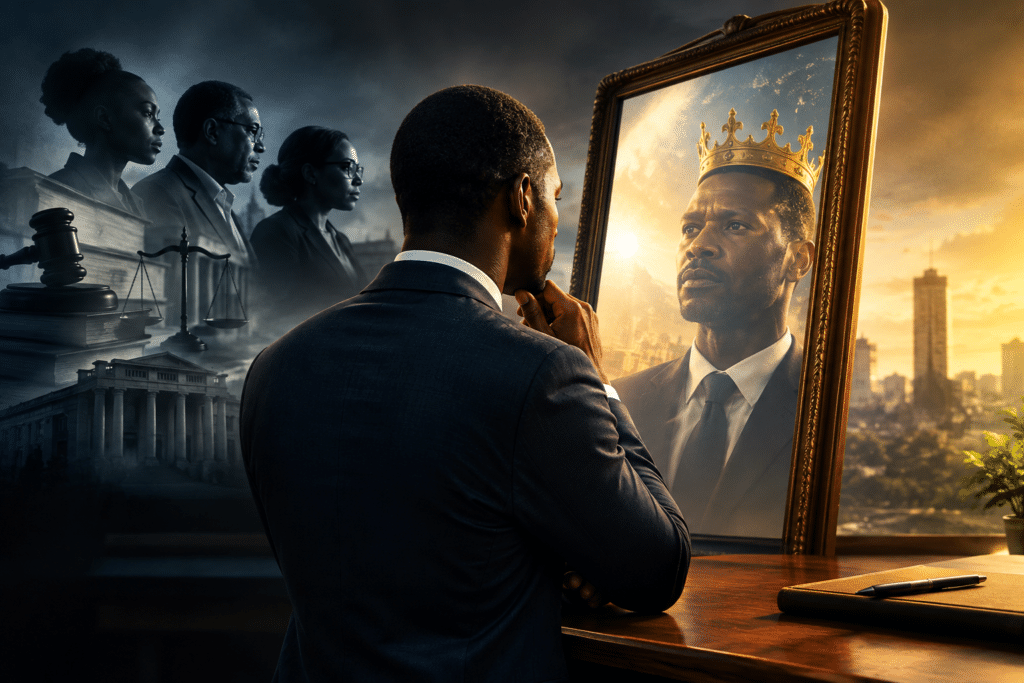
A mirror does not change your reflection because you dislike what you see. It simply shows you what is there. Leadership is much the same. Sometimes the person challenging you is not trying to undermine you. They may simply be showing you something you could not see for yourself.
The real danger is not having people who disagree with you. The real danger is creating an environment where nobody feels safe enough to do so.
That is the heart of Episode 4 of Kings & Presidents, “The Prophetic Mirror and Judicial Oversight.” It is a conversation about power, truth, accountability and the humility required to listen when the answer is not the one we hoped to hear.
Perhaps the question worth asking today is simple: Who is the Micaiah in your life, and are you willing to listen?